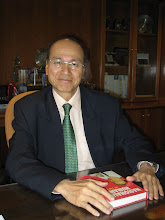
Good afternoon, and welcome to the Taylor’s University College Graduation Ceremony 2009.
This is indeed a memorable and auspicious occasion which marks an important threshold in the lives of TAYLOR’S GRADUANDS as they embark upon the next phase of their life’s journey.
As I stand before you today, I can feel the joy and excitement in this hall and I am reminded of this comment from a renowned human rights activist Malcolm X who said, “Education is our passport to the future, for tomorrow belongs to the people who prepare for it today.”
These words are personified in each and every one of you who will be proudly graduating today, whether you venture into the challenging workplace or decide to seek further education.
On a yearly basis, we see thousands of graduates being churned out by the many educational establishments. Yet each CONVOCATION is truly special in its own way. You are representatives of your family, your university and your lecturers and finally of our nation as a whole. You will become great contributors, in your respective field, to the society you live in and to the Nation as a whole. Thus today’s occasion is one to be remembered and cherished by all.
All the late nights of studying, the high doses of caffeine and the nerve-wracking moments on results day, have all finally paid off. This is your moment of accomplishment. I extend my sincere congratulations to each and everyone.
As you cross the threshold, from child to adult, student to employee, dependence to self-reliance, you will find a jarring difference between the life you are used to and the life that’s in store for you.
You are graduating at a time when our nation is being confronted by numerous challenges which will have an important bearing on your job prospects and your future.
You descend upon the job market at a distressing time. There is no skirting around this fact. In light of the current global economic downturn, the world is becoming an unfriendly place to graduates. Where obtaining the right job may have been a challenge before, getting any job is not easy now.
With companies retrenching employees by the thousands, there is no longer much impetus to hiring fresh graduates. Although this may be the current scenario, there is no need to be discouraged. You have not come to the end of the road. There are still companies with job vacancies awaiting to be taken up provided you are not selective.
Part of being employable is looking for the right job. A problem with many individuals is that their key focus when seeking job opportunities center on the remuneration package offered. While it is important not be undervalued, this should not be your focus in difficult times like this. Instead, look to the jobs that provide you with the most enriching experience. Learn and produce the very best that you can, and the rewards will follow suit. The more job experience you gain, the more employable you become but at the same time you must avoid being a rolling stone which gathers no moss.
Additionally, jobs in other sectors outside of your field of study should not be discounted either. Granted you may have studied for a specific job, and doing something else may not be much of a lucrative option. However, in today’s world and for your generation, there are infinite possibilities.
There are no longer the limitations that there used to be. Skills, knowledge and experience have become transferable between professions. Therefore, if you have interests other than your designated field of study, explore them. Exposure to alternative industries will not only make you a well-rounded individual, but will also encourage employers wanting to offer you employment.
In today’s world, although higher education is still recognized as an essential prerequisite to attaining a job in the first place, it is no longer the only thing that you need. The job market has become increasingly competitive, with hundreds and sometimes even thousands of graduates having to vie for a single place in a prestigious multi-national, all of them about as equally educated as the next.
What employers are looking for nowadays, go beyond just mere grades. They look for candidates who are unique who not only possess skills but also character and integrity. How do you create a spark of interest in the minds of your potential employers? How do you make them pick you over everyone else?
One criteria is the educational establishment you derive from. This is something that should not weigh on your mind as Taylor’s University College and Taylor’s College have a track record of producing a truly excellent class of students, who have been recognized and complimented by employers for a number of years.
By creating students who are able to consistently and autonomously learn and utilize their knowledge, accompanied by their nurturing of communication, interpersonal and intrapersonal skills, Taylor’s gears its graduates to become effective attributes to any company.
As you prepare to leave Taylor’s University College it is of paramount importance that you embrace the CORE VALUES of Taylor’s which are Excellence, Integrity, Passion, Mutual Respect, Openness in communication and creating enjoyable Environment.
Challenging Times Are Transient But Values Stand The Test Of Time
To the graduands who will be our future nation builders, my advice to you is to put into practice these important values, irrespective of what profession you are in.
Please bear in mind that we must not be a society of selfishness, of greed madly pursuing material wealth but a caring one. We should build a community imbued with cooperation and a caring spirit, moral awareness, social consciousness, psychological balance, spiritual enlightenment and integrity.
Looking at the multiple issues and challenges facing Malaysian youths today I am more convinced that it is essential to reemphasize character-building on the Agenda of what it takes to bring up children in current times.
Many a time, in the name of progress, we as parents, teachers, community leaders or the Government concentrate too much on imparting hard skills at the expense of neglecting one of the most important ingredients in the moulding of young minds – the development of one’s character.
Character is the real standard bearer of what it takes for both children and adults alike to succeed in life and to pave the way for the next generation to prepare themselves successfully for the world.
Civilisation and progress are not to be measured only by the gross national product and technological capacity.
They are also measured by the development of the human conscience and its response when faced by the facts of human sufferings.
A caring society, in my view, is one, which attaches great importance to the development of the human being – the human being who is imbued with compassion, understanding, a sense of justice and a generous attitude.
In the pursuit of success in your respective fields, you must not lose the human touch and forget about helping the needy and the poor.
You must never become so caught up in the race for success that you lose all interest beyond your personal interests and rewards.
No amount of money can substitute this essential human touch, without which progress and prosperity become meaningless.
I need to emphasise here that the progress and maturity of a society is not measured by the GDP ringgit and technological wizardry alone, but also by its sense of responsibility, spirit of generosity and the importance it places on the dignity and well-being of its less fortunate members.
In conclusion let me state that today is the first step into the rest of your life. It is but the landing for a long flight of stairs leading into the future. Be the beacon of light which shines through these darker times we face. Excel at everything you do, and leave a path of greatness for others to follow. I congratulate you all once again, for achieving the first of many milestones to come. I wish you all the best in all future endeavours.
Thank you.
Monday, February 23, 2009

NIOSH-PRESS RELEASE FOR SOCSO
According to statistics compiled by the Ministry of Human Resources, the number of industrial accidents reported to SOCSO for all sectors decreased from 109,447 in 1994 to 56,339 in 2007. This is a substantial reduction of almost 50 percent over a period of thirteen years.
Although there is a decline in the average number of industrial accidents from 17 per 1,000 workers in 1994 to 6.7 in 2007, we should strive against the benchmark of developed countries which only have 3-4 accidents per 1,000 workers.
Companies should regard occupational safety and health as part of their corporate responsibility and must allocate yearly budget for safety training to help prevent work-related accidents because accidents don’t just happen as they are caused and as such they can be prevented.
Making the workplace safe is a joint responsibility of both the employers and the employees. Thus, training of employees is the key to achieving a successful safety programme and management must be committed to invest in safety.
The focal point of safety training is the human being needs protection in all aspects of his life. Thus, training is an essential part of OSH programmes to reduce injuries and fatalities at the workplace.
An accident prevention strategy should be adopted at all workplaces. To achieve the total promotion of safety and health at work and elsewhere, organizational measures for prevention and measures for motivation and behavioural change must be adopted.
Managements who are responsible for the safety and health at the workplace can change the attitude of safety and health of their employees. Management or employers must recognize occupational safety and health of employees as an integral part of business management. Concerns for the bottomline must be looked at with equal gravity with OSH issues at the workplace. After all they are both concerned with the viability of the business enterprise.
There is a need to eradicate the misconception, that safety and health at work is the responsibility of the Government alone. It is not so. Ensuring the safety and health of workers is a collective responsibility of the Government, employers and the employees themselves. Industrial accidents can be reduced if every workplace takes steps not only to enunciate its safety and health policy but also to set up its safety and health committee with the objective of promoting a safety culture among the workforce.
Total commitment from top management is essential in working closely with employees to promote occupational safety and health for their organizations. Occupational safety should not be seen as a profit-sapping factor for the management of industries, but be regarded as a productivity booster. Industries must realize that accident prevention is no longer a fringe benefit but a prerequisite to a profitable operation.
Industries and employers must realize that four fundamental factors justify OSH management. These are, corporate responsibility, social and moral obligation, good business sense and legal obligation. Common sense tells us that effective OSH management not only reduces the risk to safety and health but also ensure high returns to the company in terms of productivity and profitability.
SPEECH ON THE OPENING CEREMONY OF FONTERRA HEALTH AND SAFETY WEEK
GOOD MORNING AND SALAM SEJAHTERA
First of all, I wish to thank the Organizing Committee for inviting me to officiate the FONTERRA HEALTH AND SAFETY WEEK.
I also wish to congratulate the management team of the Fonterra Brands (Malaysia) Sdn. Bhd. for their initiative and commitment to launch this OSH campaign.
NIOSH is always supportive and keen to work with industries in enhancing the occupational safety and health among workers and their workplace environment. This is inline with our aim to be the preferred partner of industries to promote OSH. We believe that the collaboration between NIOSH and the industries will help reduce the number of accidents and work related diseases.
The right to life is the most fundamental human right. The right to work in a safe and healthy environment is also the fundamental right of every worker.
Yet every year, according to the International Labour Organization (ILO) more than 1.2 million people are deprived of that right as a consequence of accidents and work-related diseases.
More than 100,000 work fatalities occur every month, more than 3,000 a day, two per minute. This global phenomenon, if left unchecked, leads to consequences which are unacceptable, economically, socially and morally.
Statistics provided by the ILO depict a grim picture indicating :-
Workers worldwide suffer more than 250 million accidents every year;
More than 160 million workers fall ill each year due to workplace hazards and exposures;
Accidents and diseases together account for over 1.2 million fatalities annually, more than all fatal road accidents worldwide;
More than 10 million workers suffer crippling injuries and diseases resulting in permanent disability and loss of income
According to the world body, while it is impossible to place a monetary value on human lives, compensation figures give a rough idea of how an estimated 4 per cent of gross domestic product disappears with the costs of accidents and diseases through absenteeism, medical treatment, disabilities and survivor benefits.
Estimates from developed countries like the United States, the United Kingdom, Germany and Norway put the direct cost of accidents in billions of dollars. In many developing countries, workers’ death rates are five to six times those in industrialized countries. And this creates a mounting challenge for labour protection, safety and health.
In Malaysia, the pursuit for a safe and healthier workplace for all workers is an on-going noble mission. The reduction of workplace accidents constitutes an important agenda for both the public and private sectors in tandem with the goal of a zero-accident workplace.
With the implementation of the Occupational Safety and Health Act (OSHA) 1994 and intensification of efforts by the enforcement agencies, like the Department of Occupational Safety and Health (DOSH) together with the training initiatives of the National Institute of Occupational Safety and Health (NIOSH), it is encouraging to note that fruitful efforts are being undertaken to tackle accidents at the workplace.
Ladies and Gentlemen,
When the organizer wrote inviting me to officiate Fonterra Health and Safety Week, I agreed to be part of today’s event which enables me to convey the message of best safety and health practice so that employees can ‘go to work…and return safely to their loved ones’.
According to statistics compiled by the Ministry of Human Resources, the number of industrial accidents reported to SOCSO for all sectors decreased from 109,447 in 1994 to 56,339 in 2007. This is a substantial reduction of almost 50 percent over a period of thirteen years.
Although there is a decline in the average number of industrial accidents from 17 per 1,000 workers in 1994 to 6.7 in 2007, we should strive against the benchmark of developed countries which only have 3-4 accidents per 1,000 workers.
Companies should regard occupational safety and health as part of their corporate responsibility and must allocate yearly budget for safety training to help prevent work-related accidents because accidents don’t just happen as they are caused and as such they can be prevented.
Making the workplace safe is a joint responsibility of both the employers and the employees. Thus, training of employees is the key to achieving a successful safety programme and management must be committed to invest in safety.
An accident-free environment helps the company to save and increases the organization’s productivity and profitability. It will also help to boost the morale of the workers. Companies must not profit at the expense of safety because if accidents occur, lives may be lost and productivity will be affected. Even in times of economic downturn, companies must not cut costs at the expense of safety and health.
The focal point of safety training is the human being needs protection in all aspects of his life. Thus, training is an essential part of OSH programmes to reduce injuries and fatalities at the workplace.
Furthermore, the OSHA 1994, stipulates that appropriate training courses and programmes must be formulated for the workers to effectively check the occurrence of industrial accidents at the workplace.
It also enables managers, supervisors and workers to understand the workings of safety and health systems, so that they know when to upgrade safety and health at the workplace. It is imperative that efforts to instill safety awareness through education, training and accident prevention programmes be promoted and intensified.
To fulfill the need for occupational safety and health training and education, NIOSH was created in December 1992 as the major training provider for OSH management and other OSH related training programmes in the country.
Since its inception, NIOSH has endeavoured to contribute towards efforts in upgrading OSH through developing curriculum and training programmes for workers, employers and others who are responsible either directly or indirectly for safety and health at the workplace.
We have designed a wide range of courses, which cover almost all aspects of OSH training, and awareness to meet the needs of the big multinationals as well as small and medium sized enterprises.
NIOSH have started to introduce and market its products and services to various industries, government departments and agencies. These efforts have enable NIOSH to be known among both the public and private sectors thus enabling it to be a referral center for information and services in relation to OSH in Malaysia.
An accident prevention strategy should be adopted at all workplaces. To achieve the total promotion of safety and health at work and elsewhere, organizational measures for prevention and measures for motivation and behavioural change must be adopted.
Managements who are responsible for the safety and health at the workplace can change the attitude of safety and health of their employees. Management or employers must recognize occupational safety and health of employees as an integral part of business management. Concerns for the bottomline must be looked at with equal gravity with OSH issues at the workplace. After all they are both concerned with the viability of the business enterprise.
In this connection, it is the responsibility of the employer to create a safe and healthy work environment through “self regulation”, education and safety training, while it is the duty of employees to co-operate with employers and participate actively in occupational safety and health endeavours.
There is a need to eradicate the misconception, that safety and health at work is the responsibility of the Government alone. It is not so. Ensuring the safety and health of workers is a collective responsibility of the Government, employers and the employees themselves. Industrial accidents can be reduced if every workplace takes steps not only to enunciate its safety and health policy but also to set up its safety and health committee with the objective of promoting a safety culture among the workforce.
Total commitment from top management is essential in working closely with employees to promote occupational safety and health for their organizations. Occupational safety should not be seen as a profit-sapping factor for the management of industries, but be regarded as a productivity booster. Industries must realize that accident prevention is no longer a fringe benefit but a prerequisite to a profitable operation.
Industries and employers must realize that four fundamental factors justify OSH management. These are, corporate responsibility, social and moral obligation, good business sense and legal obligation. Common sense tells us that effective OSH management not only reduces the risk to safety and health but also ensure high returns to the company in terms of productivity and profitability.
In an organization, embracing a new corporate culture requires a paradigm shift in the views of the highest echelon of management. In the case of occupational safety and health, this shift must focus on viewing the bottomline performance of the organization in the same manner as that of the number of injuries, fatalities and ill-health suffered by employees in attaining the bottomline target.
The single most important critical success factor for any change in an organization is the commitment of the Chief Executive Officer (CEO) and his senior management team.
In the area of occupational safety and health the CEO and his management team must exhibit in every way possible to the workers that they are committed to the protection of the safety and health of their workers who have to deal with the daily hazards at the workplace.
Safety and health at work cannot be effectively regulated through legislation alone. In our modern day society and advancing technology, existing regulations may not be able to keep pace with the development of new inventions and processes.
While the government and its agencies provide the leadership, legislation and guidelines, it is the employers who have to take the lead. As safety and health at work is everybody’s responsibility, the employees must also give the vital support to employers’ efforts in the promotion of OSH.
Addressing OSH issues requires a good OSH management system. This responsibility lies with the management team, which must accord serious attention to the aspect of how to manage OSH appropriately. The very objective of good OSH management is to provide the required investment in terms of commitment – financial, human resources and equipment in systematic OSH strategies – in order to secure the highest rate of return on investment such as zero accident without jeopardizing the company’s overall profit performance.
There is no doubt that for Malaysia to adopt a safe and healthy work culture amongst its working population there must be a reminder to both employers and employees of their respective responsibilities in adopting and implementing good OSH practices.
Employers must change their misconceived attitude that occupational safety and health is a liability and not an asset. At the same time, employees must not take safety for granted but stand for their right to work in a safe and health work environment as well as following strictly to safe and healthy work procedures set out.
Safety is not something we can take or leave alone nor it is an activity in which we participate only when we are being watched or supervised.
Safety is not just about safety posters, slogans, rules and regulations, videos, meetings investigations or inspections.
Safety is an attitude, a frame of mind, an awareness of our environment and actions – all day, every day.
Safety is knowing what is going on around us, knowing how to prevent that injury or accident and then acting to prevent it.
In conclusion, I wish to pronounce the idea of safety as a culture. Safety must not only be a priority but a culture. In order to make safety a culture in society, the workplace is where such a culture can be developed. Thus, safety as a culture is what we must all continue striving for, so at the end of the working day, all workers will come home safe.
With that, I am pleased to officiate FONTERRA HEALTH AND SAFETY WEEK.
Thank you.
PRESS STATEMENT IN MIRI - Anti Crime Culture
The Malaysia Crime Prevention Foundation calls on all Malaysians to work towards zero tolerance for crime by developing an anti-crime culture and making safety a way of life.
In view of the rising crime rate, more sustained efforts must be made to combat crime through more effective law enforcement and greater public participation in crime prevention.
One of the major issues we have to grapple with is the culture of violence, which is gaining a foothold in our society. The recent spate of violent crime is certainly not characteristic of our society and we have to identify the causes and find ways to deal with them.
It should be the resolve of the Government and the community to work hand in hand to tackle the culture of violence in all its forms.
In the wake of frequent press reports about crime occurrences, it is time not only for the relevant authorities but also the entire community to be fully sensitized about the need for quick and effective action to deal not only with the criminals but also the issues and causes that can lead to crime.
For example, complaints that are brought to the attention of the relevant authorities about what can be done to remove the causes for crime occurrence should be attended to speedily. Every complaint that is related to crime prevention must be acted upon.
As crimes continue to occur and given the fact that law enforcement alone is inadequate to tackle crime, the government is required to promulgate effective social policies and programmes to prevent and control criminal activities.
Policy makers, academicians, non-government organisations and the various strata of society need to stand up to the challenge of making their cities, towns and villages safe from crime and liveable for everyone.
In this connection, continuous efforts must be made to reduce crime, lessen the fear of crime and create safer cities and towns where economic enterprises and community can flourish and free from crime.
This agenda to control and prevent crime demands a synergistic, concerted and tireless endeavour from everyone. Everyone has a role to play and a function to perform in the fight against crime.
The public must be made aware of the fact that crime prevention is a collective responsibility. Since its inception, MCPF is actively involved in awareness campaigns with various community-based organizations to help create greater awareness about the need not to take their safety for granted but on the contrary to participate actively in crime prevention.
Through our safe city and safe neighbourhood initiative projects, MCPF hopes to enlist the participation of all levels of our community in educating the public about what they should do in crime prevention.
Surat Kepada Pengarang_OPS Sikap
Semua pihak yang terlibat dengan usaha peningkatan keselamatan dijalan raya merasa amat bimbang dengan perangkaan kemalangan jalan raya yang menunjukkan peningkatan sebanyak 11.6 peratus kemalangan maut semasa 15 hari OPS SIKAP sempena Tahun Baru Cina berbanding tahun sebelumnya.
Jumlah kematian yang direkodkan ada 212 berbanding 190 untuk tempoh yang sama pada tahun sebelumnya.
Purata kemalangan maut yang berlaku setiap hari adalah 14.1 berbanding 12.6 pada tahun 2008.
Menurut Ketua Traffik Bukit Aman Datuk Abdul Aziz Yusof sasaran pihak polis untuk mengurangkan kemalangan maut sebanyak 5% tidak akan tercapai selagi pengguna jalan raya tidak mengubah sikap buruk mereka semasa memandu.
Aziz menyatakan penunggang dan pembonceng motosikal merupakan jumlah yang terbesar iaitu 72% atau 152 kematian dan ini merupakan peningkatan sebanyak 43.4 % dari tahun 2008.
Apa yang amat ironi ialah ”OPS SIKAP” bertujuan untuk mengubah sikap pengguna jalan raya tetapi peningkatan jumlah kemalangan maut menunjukkan sikap buruk dikalangan sebahagian pengguna jalan raya, terutamanya penunggang motosikal seperti Mat Rempits, tidak berubah.
Saya sendiri sebagai seorang pengguna jalan raya sering tertanya-tanya kenapa ramai penunggang motosikal tidak mematuhi peraturan jalan raya dan tidak memperdulikan keselamatan mereka sendiri.
Penunggang motosikal yang tidak mematuhi lampu trafik, tidak mengikat topi keledar dengan kemas, dan keluar masuk didalam arus trafik adalah kejadian biasa diatas jalan raya kita.
Penunggang juga menunggang di lorong trafik yang membahayakan diri mereka sendiri di lebuh raya. Terdapat juga penunggang yang memecut dengan laju dan tiba-tiba berada dihadapan kenderaan lain yang juga amat berbahaya dan boleh menyebabkan kemalangan.
Mereka kelihatan tidak sabar untuk menunggu lampu trafik bertukar hijau dipersimpangan jalan.
Adakah ini telah menjadi cara hidup penunggang dan penumpang motosikal?
Bahkan terdapat remaja yang tidak dikawal oleh ibubapa mereka suka meniru cara pemanduan Mat Rempit yang semakin bertambah buruk tersebut.
Kegagalan ‘OPS SIKAP’ yang terbaharu ini untuk mengurangkan kadar kemalangan maut perlu kajian yang menyeluruh terhadap strategi dan pendekatan yang diambil untuk kempen akan datang.
Adakah usaha kita sekarang memadai untuk merubah sikap pemandu jalan raya atau adakah penunggang motosikal belum bersedia untuk berubah sikap dan tidak menyayangi nyawa mereka?
Disamping itu saya juga ingin menyarankan kepada pihak yang berkenaan supaya memperbaiki lebih kurang 346 kawasan yang mudah kemalangan diseluruh Negara, yang telah dikenalpasti oleh pihak polis. Jalan-jalan yang dikenalpasti berbahaya ini perlu diperbaiki dan diselenggara dengan baik.
2009 FT Day
Letter to Editor
As we commemorate Federal Territory Day in Kuala Lumpur – our 35th anniversary – it is time for all of us both City Hall and its 1.7 million residents to see how we can further contribute in our respective ways to ensure Kuala Lumpur becomes a world-class liveable city.
While we can take pride in our past achievements, it is also appropriate for us to look at our present shortcomings and address them so that our dreams, hopes and aspirations can be attained.
I am privileged to have been given an opportunity to serve Kuala Lumpur – 21 years as an elected representative followed by another 16 years as a Member of the Kuala Lumpur City Hall Advisory Board.
A new Datuk Bandar has been appointed for Kuala Lumpur and I am confident that under his leadership Datuk Ahmad Fuad Ismail will bring City Hall and Kuala Lumpur to greater heights of achievement.
Among the current issues of concern that need further action from the Federal Territory Ministry and City Hall to address include:-
a. Ensuring Good Governance and a Good Delivery System with quick and efficient response to public complaints.
b. Developing a good maintenance culture where all public amenities are properly maintained.
c. Continue efforts to bring about an Integrated Efficient Public Transport System for use by Kuala Lumpur residents as a means to reduce traffic congestion.
d. Increase efforts to make Kuala Lumpur truly environmentally friendly by providing more trees, more parks and recreational spaces for city dwellers and addressing water and air pollution.
e. Contributing towards crime prevention by actively implementing the Safe City Initiative Programme and the concept of crime prevention through environmental design.
While we expect our local authority to do more to address the many complex issues in the city, it is also necessary for all city dwellers to increase their civic consciousness, be proactive and adopt the right attitude in terms of Kuala Lumpur’s continued growth and progress.
City dwellers have also to play their rightful role. Other than contributing their ideas and feedback towards the Mayor and City Hall, city folks should help ensure the city’s cleanliness by refraining from throwing litter indiscriminately and do not vandalize or cause damage to public amenities.
Get involved in more voluntary activities such as organizing gotong-royong campaigns, to protect the environment. This is also one effective way to fight the present dengue outbreak.
There are many challenges that lie ahead for Kuala Lumpur to be a world-class liveable city.
Much not only depends the Mayor and his officials but also policy directions of the Federal Territory Ministry and above all the earnest participation of all concerned NGOs, the peoples’ elected representatives and the city dwellers.
Eventually we must build a sense of belonging, love and pride for our city of Kuala Lumpur – A City for All.
KE ARAH MEWUJUDKAN BUDAYA ANTI JENAYAH
PENDAHULUAN
Setiap hari kita pasti akan terbaca laporan dan berita mengenai pelbagai perilaku jenayah dan keganasan yang berlaku di setiap bandaraya utama dunia termasuklah di bandar-bandar utama Malaysia. Antara jenayah yang berlaku ialah serangan terhadap orang ramai, orang yang sedang beriadah di taman-taman, pengguna tempat letak kereta, orang yang menaiki pengangkutan awam, penculikan, rompakan, kes ragut, wanita yang diperkosa serta yang paling jijik sumbang mahram.
Di Malaysia, jenayah dan ketakutan terhadap ancaman jenayah telah mula nampak kesannya di bangunan-bangunan, taman-taman dan kawasan-kawasan tertentu. Bangunan dipagari dengan pagar besi dan dipasang peralatan keselamatan, sementara rumah orang kenamaan, orang kaya dan kedai pejabat dikawal oleh pengawal-pengawal keselamatan. Banyak juga kawasan di dalam bandar disediakan laluan khas pejalan kaki yang turut dipisahkan dengan penghalang dari laluan yang digunakan oleh kenderaan.
Menurut sebuah laporan yang dikeluarkan oleh Pusat Penempatan Manusia Bangsa-Bangsa Bersatu (United Nations Centre on Human Settlement) beberapa tahun yang lalu, keganasan yang berlaku di bandar-bandar seluruh dunia telah meningkat lebih kurang antara tiga ke lima peratus setahun sepanjang dua dekad yang lalu.
KETIDAKSEIMBANGAN DAN PENGASINGAN MASYARAKAT
Jenayah dan keganasan di bandar bukanlah fenomena yang berlaku secara spontan tetapi adalah berpunca daripada ketidakseimbangan dan pengasingan dari masyarakat.
Usaha bagi melindungi masyarakat bandar dari gejala kemiskinan, pengangguran dan ketidakadilan dalam integrasi sosial pastinya akan juga melindungi mereka dari jenayah dan keganasan.
Walaupun proses perbandaran dan kemiskinan saling berkait dengan tahap keganasan dan jenayah di bandar, terdapat faktor-faktor lain seperti keadaan politik, ekonomi dan sosial yang turut menyumbang ke arah keadaan tersebut.
Kemorosotan nilai moral dan keruntuhan struktur dan institusi sosial seperti keluarga dan kawasan sejiran menimbulkan lebih banyak risiko keganasan dan jenayah di bandar.
Terdapat banyak kesan dan akibat daripada keganasan yang berlaku di bandar. Selain daripada kecederaan dan trauma emosi, ia turut mencetuskan rasa tidak selamat yang akan menjurus kepada ketidakpercayaan, kekurangan toleransi, pengasingan diri dan dalam kes-kes tertentu bertindakbalas ganas.
Bagi mengelakkan jenayah dan keganasan di bandar, perkongsian bijak antara majlis perbandaran setempat, pertubuhan komuniti, pihak polis dan sistem kehakiman perlu dijadikan sebagai sebahagian penting daripada program pencegahan jenayah negara.
Sebuah masyarakat tanpa jenayah adalah masyarakat yang sejahtera dan bahagia. Ini adalah sesuatu yang diidam-idamkan oleh semua masyarakat sejagat. Justeru itu, slogan seperti Masyarakat bebas Jenayah (Crima Free Society), Jenayah Sifar (Zero Crime), Bandar Selamat (Safe City), Kejiranan Selamat (Safe Neighbourhood) sering menjadi sentuhan mulut anggota masyarakat yang prihatin terhadap keselamatan dan kesejahteraan negara.
Lebih 75 peratus daripada jumlah kes jenayah yang dilakukan adalah ekoran daripada kecuaian mangsa-mangsa yang memberi peluang kepada si penjenayah untuk melakukan jenayah.
Kebanyakan kes rompakan dan jenayah di jalan raya berlaku secara spontan berikutan dengan wujudnya satu peluang bukannya hasil daripada sebuah perancangan yang terperinci.
Kawasan yang mempunyai kadar jenayah yang tinggi selalunya adalah kawasan yang mudah dimasuki dan dikenali oleh si penjenayah sebagai tempat yang memberi peluang kepada mereka untuk menyerang mangsa pada masa-masa tertentu.
INISIATIF BANDAR SELAMAT
Oleh itu, maka timbul-lah konsep INISIATIF BANDAR SELAMAT yang berasaskan prinsip bahawa PENCEGAHAN ADALAH LEBIH BAIK DARIPADA PENGHAPUSAN JENAYAH. Pendekatan yang terpilih dalam tindakan pencegahan jenayah ini ialah melalui rekabentuk Persekitaran (Crime Prevention through Environmental Design) yang selamat di mana peluang-peluang untuk melakukan jenayah dapat dikurangkan.
Di sini para professional seperti juru perancang, arkitek, jurutera dan kontraktor boleh memainkan peranan masing-masing. Langkah-langkah pencegahan jenayah jarang sekali diberi pertimbangan semasa merancang pembangunan bandar atau pembinaan projek perumahan, tapak-tapak industri, taman rekreasi atau lain-lain pembangunan infrastruktur di negara ini walaupun ia merupakan isu utama yang sering diambilkira di negara maju.
Isu membanteras jenayah wujud hanya di dalam minda sahaja dan dibangkitkan secara tidak langsung apabila perancang bandar sedang merancang sebuah penempatan yang tersusun (teratur) yang didiami oleh sebuah masyarakat yang bersepadu.
PENGURANGAN PELUANG MELAKUKAN JENAYAH
Langkah-langkah pencegahan jenayah pada dasarnya menuju ke arah pengurangan peluang-peluang untuk melakukan jenayah iaitu dengan mewujudkan ruang yang selamat.
Apa yang diperlukan ialah pengwujudan reka bentuk persekitaran yang boleh melindungi dan mewujudkan keprihatinan serta kewaspadaan masyarakat yang diperlukan untuk pencegahan jenayah.
INISIATIF BANDAR SELAMAT merupakan sebuah projek utama MCPF yang bertujuan untuk mewujudkan suasana kehidupan yang selamat dan mengurangkan peluang penjenayah melakukan jenayah. Bandar yang selamat bermaksud sebuah bandar yang bebas dari jenayah di mana penduduknya tidak dibelenggu dengan perasaan takut terhadap ancaman jenayah.
Di dalam konteks ini, INISIATIF BANDAR SELAMAT merupakan satu contoh yang baik di mana kerajaan dan orang ramai bekerjasama dalam usaha mencegah jenayah. Pencegahan jenayah boleh dilakukan melalui perancangan dan rekabentuk alam sekitar, pembangunan masyarakat dan dengan mendidik rakyat supaya lebih berhati-hati dalam apa juga keadaan supaya mereka tidak mengundang bahaya.
Secara ringkas, INISIATIF BANDAR SELAMAT merupakan satu program yang mengandungi aktiviti-aktiviti yang dirancang, di mana pihak polis dan orang ramai berusaha sama menyelesaikan masalah-masalah setempat yang berkaitan dengan jenayah secara amnya dan khususnya untuk mewujudkan satu persekitaran fizikal yang boleh menangani masalah jenayah dan sekali gus mencegah kegiatan jenayah.
Dalam usaha Malaysia menuju ke arah negara maju, Program INISIATIF BANDAR SELAMAT menjadi satu pendekatan dan langkah ke arah usaha pencegahan jenayah.
Pada dasarnya 11 aktiviti akan dilakukan di dalam perlaksanaan INISIATIF BANDAR SELAMAT :-
Pemilihan kawasan projek ;
Mengenalpasti kumpulan sasar di dalam kawasan projek ;
Menerangkan konsep (mengenai inisiatif bandar selamat) kepada kumpulan sasar tersebut ;
Menubuhkan jawatankuasa bandar selamat untuk kawasan projek tersebut ;
Mengenalpasti jenayah dan masalah oleh kumpulan sasar dan jawatankuasa bandar selamat ;
Menyelesaikan masalah oleh kumpulan sasar ;
Mendapatkan khidmat juru runding sekiranya perlu ;
Melaksanakan cadangan-cadangan terhadap pencegahan jenayah ;
Memantau keberkesanan perlaksanaan cadangan-cadangan tersebut dan membuat perubahan sekiranya perlu ;
Merekodkan aktiviti projek dan ;
Memantau konsep bandar selamat secara berterusan dan mengambil langkah-langkah yang perlu seterusnya.
Jawatankuasa Bandar Selamat akan dipengerusikan oleh seorang wakil penduduk, lebih sesuai pengerusi persatuan penduduk dan ahli-ahlinya mengandungi wakil-wakil dari pihak berkuasa tempatan, Jabatan Polis, MCPF, agensi kerajaan yang berkenaan, pihak pemaju dan ahli professional seperti arkitek, perancang bandar dan lain-lain.
Perlaksanaan INISIATIF BANDAR SELAMAT memerlukan persefahaman dan kerjasama yang rapat di antara semua pihak yang berkaitan dengan masyarakat setempat. Mereka yang terlibat termasuklah perancang bandar dan arkitek yang merekabentuk bangunan, pihak pemaju yang membangunkannya, pihak kerajaan yang bertanggungjawab mentadbir kawasan tersebut dan penduduk setempat yang tinggal di situ agar semuanya berusaha untuk mewujudkan suasana kehidupan yang aman, damai dan selamat.
Faedah terbesar daripada projek ini ialah penyelesaian masalah dalam konteks keperluan tempatan oleh penduduk tempatan itu sendiri. Wargakota harus diiktiraf sebagai golongan yang dapat memainkan peranan melalui sumbangan idea untuk menangani jenayah. Inisiatif ini mengiktiraf keselamatan bandar sebagai sebahagian daripada dasar awam yang terpenting dalam kehidupan bandar. Dengan itu, perlaksanaan INISATIF BANDAR SELAMAT adalah wajar dalam meningkatkan usaha orang ramai dalam membanteras jenayah.
Selain membantu dalam usaha pencegahan jenayah. INISIATIF BANDAR SELAMAT juga bermaksud untuk membina perhubungan baik sesama penduduk. Ia dapat membentuk kerjasama yang baik di antara satu sama lain dan ini adalah penting dalam sebuah negara yang berbilang bangsa.
Melalui inisiatif yang bertujuan untuk mewujudkan Bandar Selamat secara tidak langsung ianya juga membantu mengeratkan hubungan kaum di samping memperkukuhkan konsep kejiranan.
Sehingga kini beberapa projek bandar selamat telah dilancarkan oleh MCPF namun kita sebagai masyarakat setempat harus juga memainkan peranan untuk menjayakan INISIATIF BANDAR SELAMAT dan mengekalkan keselamatan bandar tersebut.
Walaupun kita sedar bahawa pihak polis memainkan peranan yang penting dalam usaha membanteras jenayah, ianya bukanlah tanggungjawab mereka semata-mata. Orang ramai juga haruslah sentiasa berwaspada dan sama-sama membantu dalam membanteras jenayah.
Walaupun indeks kadar jenayah umumnya menurun, lebih banyak usaha perlu dilakukan untuk menangani jenayah melalui penguatkuasaan undang-undang dengan lebih berkesan dan meningkatkan pembabitan masyarakat dalam usaha pencegahan jenayah.
YAYASAN PENCEGAHAN JENAYAH MALAYSIA (MCPF) INGIN MENYERU RAKYAT MALAYSIA SUPAYA BERUSAHA KE ARAH TOLERANSI SIFAR TERHADAP JENAYAH DENGAN MEWUJUDKAN BUDAYA ANTI JENAYAH DAN MENJADIKAN SUASANA SELAMAT SEBAGAI SUATU CARA HIDUP.
BUDAYA ANTI JENAYAH
Kebudayaan mempunyai hubungan erat dengan masyarakat. Segala sesuatu yang terdapat di dalam sesebuah masyarakat mempunyai hubungkait atau boleh ditentukan oleh kebudayaan yang dimiliki masyarakat itu sendiri.
Budaya boleh dianggap sebagai sesuatu yang diperturunkan daripada satu generasi ke generasi seterusnya.
Kebudayaan ialah keseluruhan pengertian, nilai, norma, ilmu pengetahuan serta struktur-struktur kemasyarakatan, keagamaan selain penghasilan seni dan intelektual yang membentuk ciri-ciri khas sesebuah masyarakat.
Saya memandang budaya sebagai satu konsep menyeluruh yang mengandungi ilmu pengetahuan, kepercayaan, kesenian, tatasusila, undang-undang, adat resam dan lain-lain kebolehan serta kebiasaan yang diperolehi oleh manusia sebagai anggota masyarakat.
Kebudayaan bolehlah disimpulkan sebagai keseluruhan cara hidup manusia termasuk hasil ciptaan dan pemikiran yang sesuai dengan kehendak rohani dan jasmani yang menjadi amalan untuk kesejahteraan hidup sesuatu kelompok masyarakat
BUDAYA GANAS
Satu daripada isu utama yang perlu kita atasi ialah budaya keganasan yang kini semakin menular dalam masyarakat kita. Budaya ini pastinya bukan ciri masyarakat kita. Oleh itu, kita perlu mencari punca masalah serta langkah mengatasinya.
Pihak Kerajaan, pertubuhan bukan Kerajaan dan masyarakat perlu berganding bahu dalam usaha menangani apa juga bentuk keganasan. Kita juga perlu memberikan lebih tumpuan terhadap aspek keselamatan dan persekitaran bebas jenayah di samping berusaha mencapai pembangunan negara yang seimbang.
Tahun-tahun kebelakangan ini, kita menyaksikan pelbagai masalah sosial seperti ancaman dadah yang serius, salah laku juvana dan jenayah, keganasan terhadap kanak-kanak, kerosakan harta awam, pembuangan sampah merata-rata dan kurangnya kesedaran sivik di kalangan masyarakat.
Semua ini adalah petanda kemorosatan nilai murni yang jika tidak diatasi dengan berkesan akan menggugat aspirasi kita dalam menjadikan Malaysia sebuah negara maju.
Dunia kini dibelenggu fenomena yang sangat membimbangkan. Dimana juga terdapat pembangunan ekonomi dan permodenan yang seterusnya menghasilkan taraf kehidupan lebih baik, di situlah munculnya masalah sosial yang baru.
Kita bukan saja perlu menangani masalah sosial dan cabaran ekonomi tetapi isu lain yang lebih penting seperti integrasi kaum dan perpaduan. Apa yang membimbangkan ialah hampir tiada hari berlalu tanpa laporan masalah sosial dan jenayah.
Hal ini menarik perhatian ramai dalam mempersoalkan bagaimana kejadian ini boleh berlaku di kalangan masyarakat kita. Jalan penyelesaian mudah ialah dengan menganggapnya sebagai lencongan daripada sesuatu yang normal dan berharap masa dapat mengubah segala kecelaruan ini supaya keadaan kembali seperti sedia kala.
Hakikatnya, jenayah masih terus dilakukan oleh golongan muda. Kita perlu menentukan punca berlaku jenayah ini dan mencari jalan penyelesaian untuk mengatasi masalah. Jika peningkatan kadar jenayah adalah sebahagian daripada hasil kemajuan negara, maka aspek ini harus ditangani.
NILAI MURNI
Kerajaan, pertubuhan bukan kerajaan (NGO) dan masyarakat keseluruhannya perlu memulakan usaha dalam mewujudkan satu program NILAI MURNI UNTUK NEGARA bagi mempromosikan kesedaran terhadap nilai kemanusiaan yang murni dalam masyarakat.
Tugas ini sudah menjadi suatu keperluan bagi negara dalam mencapai keseimbangan antara pembangunan ekonomi dan teknologi maklumat, di samping pembangunan sosial dan moral.
Kita tidak sepatutnya melahirkan suatu masyarakat yang angkuh, tamak dan terlalu asyik mencari harta kekayaan, sebaliknya kita perlu mewujudkan masyarakat yang penyayang dan yang dipupuk dengan semangat tanggungjawab, kesedaran moral dan keinsafan rohani.
KESIMPULAN
Demi masa depan generasi akan datang, rakyat Malaysia perlu mendukung nilai murni dengan teguh dan padu serta tidak meneladani budaya barat secara membuta tuli.
Institusi kekeluargaan dan nilai murni perlu dipelihara dan dipupuk supaya dapat digunakan sebagai perisai kepada pelbagai masalah sosial yang mengancam masyarakat.
Apabila sekolah kita dibelenggu oleh peningkatan kadar kes perlanggaran displin, adalah menjadi tanggungjawab kita untuk memberikan lebih perhatian terhadap pentingnya kita kembali kepada prinsip asas nilai kemanusiaan dan murni.
Kita perlu mendidik anak kita dan memastikan mereka menghargai nilai murni seperti sifat toleransi, persefahaman, menghormati orang tua, patuh kepada undang-undang, keyakinan diri dan sifat keterbukaan terhadap perbezaan agama, kepercayaan, adat dan budaya.
Yang paling pentingnya, kita perlu mewujudkan budaya anti-jenayah di kalangan generasi muda agar kita dapat berusaha ke arah jenayah sifar di masyarakat kita.
Allocate RM50 million to mission schools nationwide
Deputy Prime Minister Datuk Seri Najib Tun Razak’s announcement to allocate RM50 million to mission schools nationwide for upgrading work and other projects has generally been well received and is something that has been along awaited.
It is better late than never. This is a good start to come to the assistance of these mission schools which have been overlooked in our nation’s educational development.
As Najib pointed out very rightly – he himself being a product of St John’s Institution in Kuala Lumpur – mission schools have contributed significantly to Malaysia’s development by producing many national leaders and corporate figures in the service of the Nation.
It is most appropriate for mission schools to be given financial assistance as they deserve it in view of their contributions to educational development.
As an old Michaelian and a product of La Sallian education I have benefited from the commitment and tireless efforts of the dedicated Brothers and teachers during the formative years of my life.
Dedicated Brothers and Teachers of the La Sallian Schools in Malaysia have selflessly given their best years to provide quality education to hundreds of thousands of Malaysian students of all races.
To enable these very devoted La Sallian Brothers to further their contribution to all La Sallian Schools, the Government should consider to extend their present mandatory retirement age of 55 till 58 as allowed for other teachers.
These mission schools have contributed immensely to the distinctive brand of La Sallian tradition, a tradition that stands for high academic standards, character-building, discipline, patriotism, and an environment where students of all races and religions mix freely.
It is these Brothers, among others, that brought the English language to our forefathers and us, a gift that we now recognize as the key to knowledge and international competitiveness.
Those of us who have experienced and are privileged to witness the ethos and tradition instilled by the dedication of the La Sallian Brothers and Teachers have a responsibility to pass on and to uphold this tradition.
Mission schools must continue to flourish and help the Nation to break down the unhealthy trend of racial polarization among students in our schools today.
What needs to be emphasized is that mission schools do not indoctrinate and convert students to Christianity but on the contrary promote moral education, nationhood and loyalty to the Nation.
A school is not just stones and bricks, rather it is the dedication of its teachers, its tradition and the respect and love it commands from its students.
Subscribe to:
Posts (Atom)